
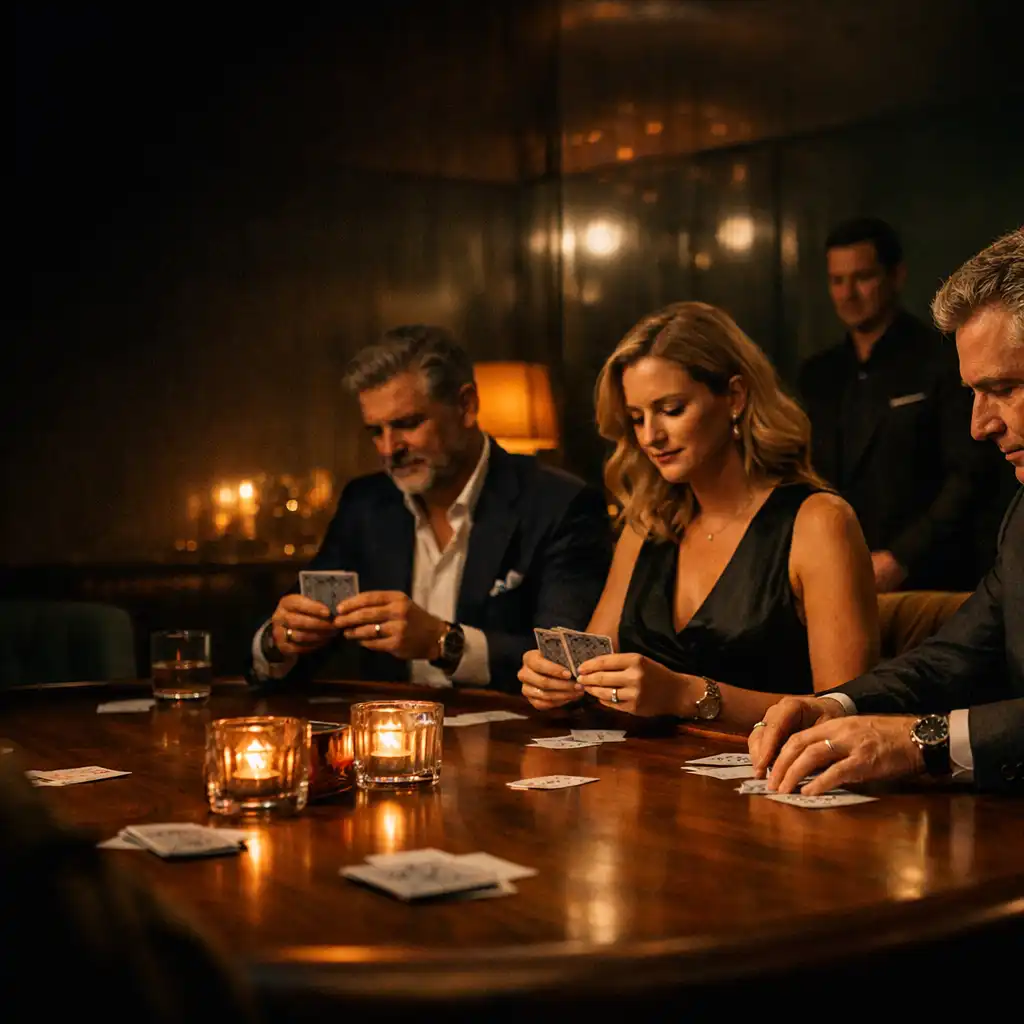
Guests and a host gathered around a walnut table in an offline card room
Offline venue · Hosted table experiences

A card room for the long evening

Card Room Experiences brings classic card games, the poker lounge and restaurant dining into one considered destination. It is an offline place for social play, calm hosting and conversation after dark—not an online casino, betting service or real-money gaming offer.

View experiences
01 · Find your table

Choose the mood of the table

Every evening starts with the gathering itself. These experience modes offer a useful way to talk about the atmosphere you want, while leaving room for conversation with the venue.

01

Hosted table experiences

A host helps the table settle into an easy rhythm, offering a welcoming introduction, setting clear expectations and keeping the focus on the people gathered. It is an approachable structure for guests who want a sociable offline occasion without a rushed or overly formal mood.
02

Classic games, considered company

Classic card games bring a familiar table-centred pleasure to the room. Their appeal is in shared attention, clear rhythms and the small rituals of a deck on felt or walnut. Formats can be discussed broadly rather than assumed as a fixed programme.

Poker lounge

The lounge around the table

The poker lounge is as much about atmosphere as play: a place to settle into conversation, cocktails, curated food and wine, with the hosted table becoming part of a longer late-evening gathering rather than a separate spectacle.

02 · Editorial guide

Best 10 Classic Card Games


This Best 10 guide recognises the games that continue to shape card-room conversation and shared table rituals. It is a culture guide, not a live programme or rules manual. If a particular table atmosphere interests your group, it can be raised through an enquiry about hosted experiences.

  1. 01

    Poker

    Poker carries a particular kind of conversational focus: the pause before a card is turned, a well-timed observation, the quiet theatre of people sharing one table. In an offline lounge setting, its enduring character lies in attentiveness and company rather than spectacle.

  2. 02

    Bridge

    Bridge is shaped by partnership and patient exchange. Its culture rewards a table that listens, notices and gives each hand room to breathe, making it a natural reference point for guests who enjoy a composed, companionable evening.

  3. 03

    Rummy

    Rummy has an adaptable table rhythm that feels easy to fold into a relaxed gathering. It is often remembered for its conversational pace, where the deck keeps the table together while the room remains open to stories and easy interruption.

  4. 04

    Gin Rummy

    Gin Rummy suggests quick, intimate rounds and a close table. Its appeal is the neatness of the ritual: cards gathered, a brief exchange, then space to return to a drink, a shared plate or the conversation at hand.

  5. 05

    Canasta

    Canasta belongs to the livelier end of classic card culture. It brings the energy of a fuller group without losing the charm of a shared table, making it a useful touchstone for gatherings where conversation is expected to carry through the evening.

  6. 06

    Cribbage

    Cribbage is steeped in ritual and scorekeeping tradition, with a tactile quality that suits a room attentive to small details. It evokes a table where familiar gestures matter and the deck becomes part of an unhurried social rhythm.

  7. 07

    Euchre

    Euchre has compact partnership energy and a sociable feel. It is a classic example of how a card table can give guests a shared point of focus while leaving plenty of room for gentle conversation, hospitality and a relaxed sense of occasion.

  8. 08

    Whist

    Whist sits behind much of elegant trick-taking culture. Its presence in the classic canon lends a sense of lineage to the card room: a reminder that a considered evening can be built around attention, exchange and the enduring language of a deck.

  9. 09

    Hearts

    Hearts brings a touch of friendly table tension while remaining rooted in togetherness. It is remembered less for technical detail than for the expressive glances and quick discussion it can invite among people who are comfortable sharing an evening.

  10. 10

    Solitaire

    Solitaire is a reflective deck ritual rather than a group-room promise. Its place in card culture is quieter: the simple pleasure of handling cards, arranging a private moment and recognising that every card room begins with a lasting affection for the deck.

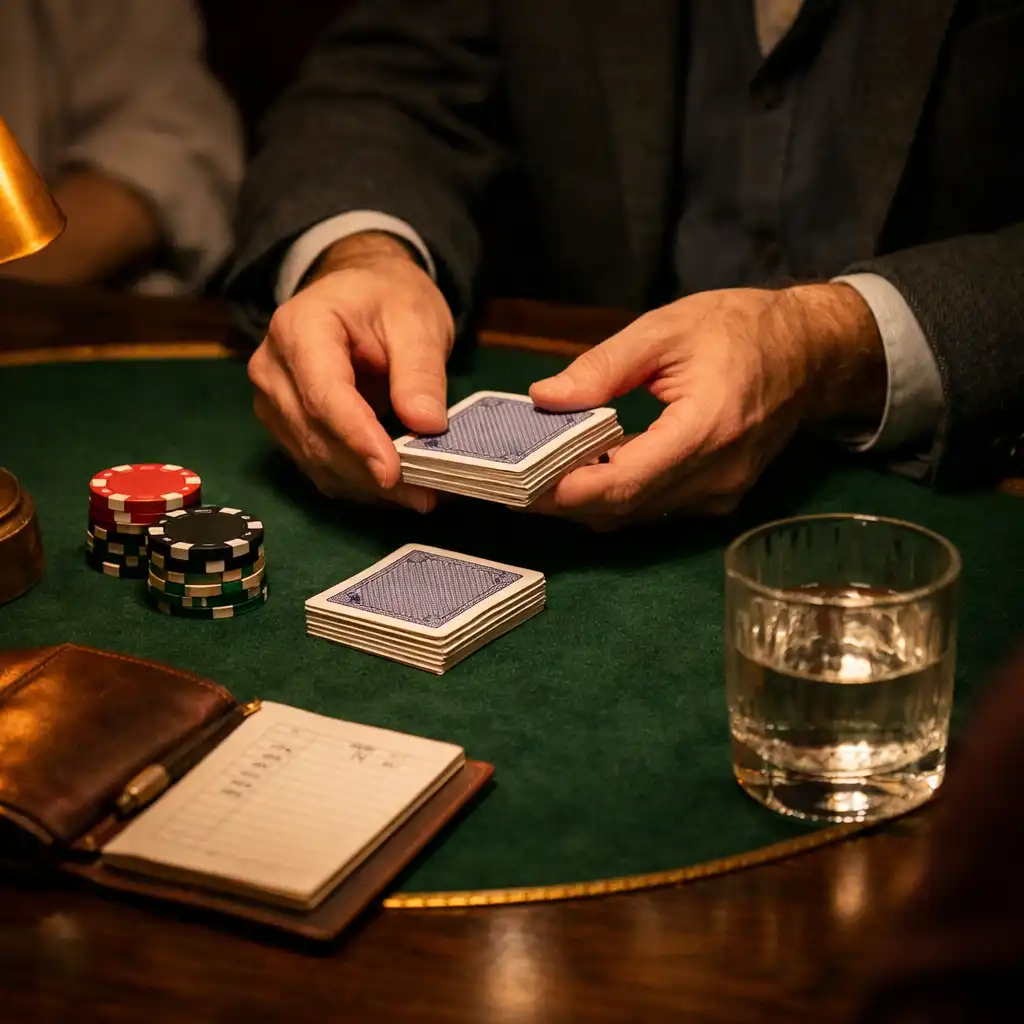
Host hands arranging standard playing cards on a bottle-green table
Hosted table experience

A table with a sense of occasion

A hosted table can help guests find a comfortable rhythm whether they arrive familiar with card-room culture or simply curious about it. The host offers introductions, keeps expectations clear and gives the evening a natural conversational pace. There is room for different levels of familiarity without turning the table into a test or a lesson.

The culture is part of the experience

Respect the shared table

Cards offer a reason to gather, but the people present remain the point. Leave space for conversation, notice the pace around you and let everyone take part in the room’s easy rhythm.

Let the host set the tempo

A calm host helps the group move between introductions, table time and the wider lounge atmosphere. Following that tempo keeps the experience welcoming and lets attention stay with the occasion.

Keep the evening present

This is an offline setting made for shared attention. A considered table works best when guests are engaged with one another, the deck and the hospitality unfolding around them.

A card-room visit can sit naturally within a longer restaurant evening, with premium food, wine and cocktails adding an opening, a pause or a gentle close to the gathering. Explore restaurant dining.

03 · Consider the atmosphere

Two ways into the room

A social poker lounge gathering and a classic card-game table can both suit an offline evening. The distinction is less about hierarchy than atmosphere, conversation and the kind of shared rhythm your group wants to create.

Poker lounge

The poker lounge suits guests drawn to a late-evening setting where hosted social play sits alongside drinks, conversation and the ambient warmth of the room. It can feel spacious, relaxed and naturally connected to the broader hospitality of the venue.

Classic card table

A classic card table centres familiar games, shared rituals and a more contained pace. It can be a thoughtful choice for a group that enjoys the tactile presence of a deck, clear table attention and an evening that unfolds through conversation.

Start with the gathering you want

  • Consider whether your group imagines a lounge-led evening or a more focused classic table.
  • Discuss the mood you hope to create, from a close catch-up to a wider social gathering.
  • Think about whether restaurant dining should open the evening, sit alongside it or offer a natural pause.
  • Raise any private poker night or private event intentions when you make an enquiry.
04 · Dining and conversation

Dining gives the table a beginning

Premium food and wine can give a private poker night or hosted card-room gathering a natural opening. A shared table, considered plates and an unhurried exchange create a sense of arrival before the card room becomes part of the evening.

The restaurant remains secondary to the occasion here, yet it helps hold the night together: a place to reconnect, enjoy cocktails and let conversation settle before or alongside time in the lounge.

“The best gatherings leave room for the table to change pace.”

Occasions with room to linger

01

A close group

For friends who value a long dinner, a familiar deck and enough time to keep talking between each part of the evening.

02

A client gathering

For a considered social context where food, conversation and a hosted table can create an easy shared point of focus.

03

A birthday dinner

For marking an occasion with good company, a generous meal and a lounge moment that feels personal rather than overproduced.

04

A late-night reunion

For people returning to the same table, ready to extend dinner into stories, drinks and a calm hosted card-room atmosphere.

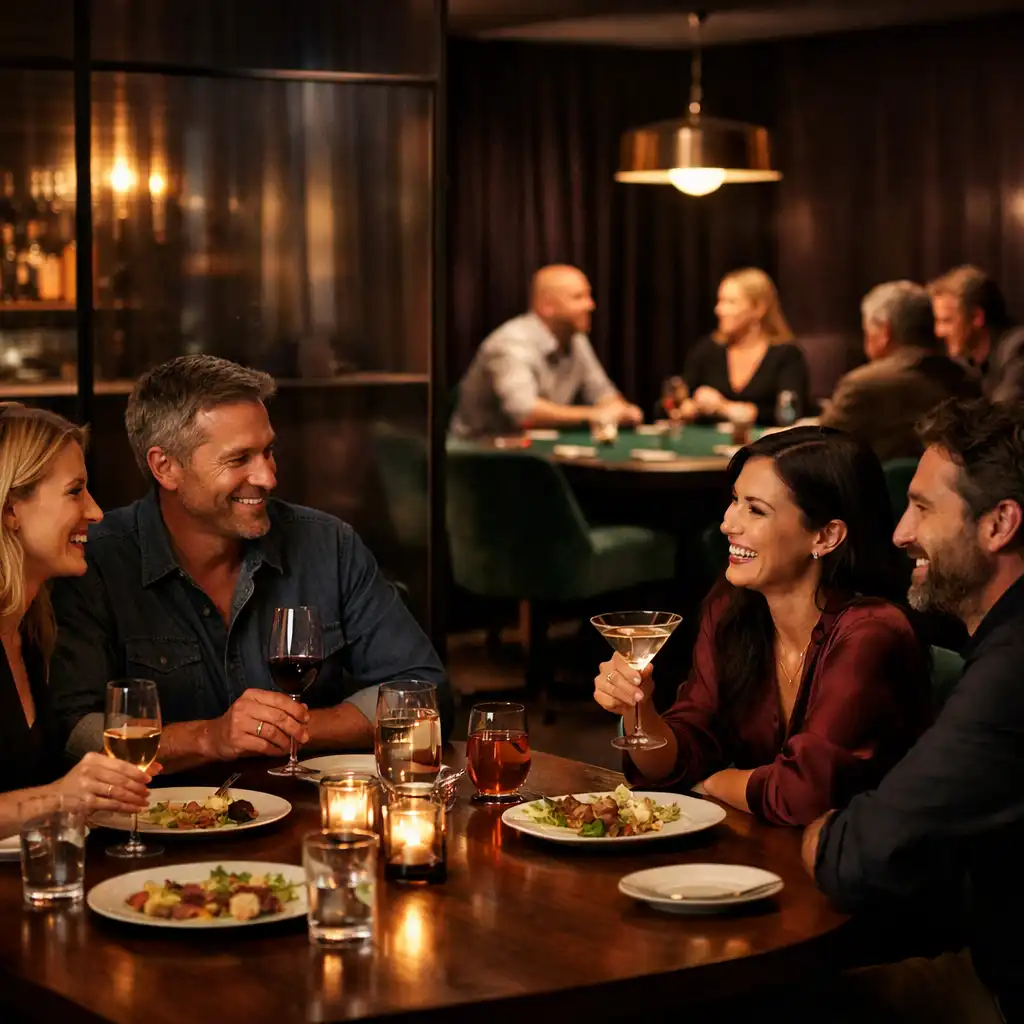
Friends sharing dinner with a softly lit card lounge in the background
05 · First visit

For a first visit

A few simple ideas can make a first offline card-room evening feel more familiar from the outset.

01

Begin with the room

Arrive ready to settle in rather than hurry through the occasion. Notice the gathering, share the table’s pace and let the evening be social. Card-room culture is at its best when hospitality and conversation have as much space as the cards.

02

Choose a shared rhythm

Use the Best 10 guide as a conversation starter when your group is considering the atmosphere of a classic game. It is editorial inspiration, not an availability list, and can help give shape to a discussion about the evening.

Revisit the Best 10 guide
03

Shape the occasion

A hosted table experience can be discussed around your group, the kind of evening you want and any dining intentions. This is especially useful when a private poker night is part of a wider gathering rather than the whole plan.

Private event enquiry

Bring your group to the table

Considering a private poker night, a hosted table experience or a dining-led gathering? Make a considered private-event enquiry to discuss the occasion, the table atmosphere and the dining intentions that may sit around it. Best10 Guides is an offline hospitality and entertainment destination, and the conversation can begin with the group you hope to bring together.

Make an enquiry

Offline venue note. The card room is an offline social and hospitality experience. It is not an online casino, betting service or real-money gaming service.

07 · More context

Explore the setting further

For restaurant context or a broader lounge overview before an enquiry, these two destinations offer a useful next read. Each helps show how dining and the poker lounge belong to one social setting.